
May 18, 2026
Company Profile
Wholesale Trade
Southern Design Group designs and supplies premium architectural hardware across residential and commercial projects.
The
Challenge
View
The Challenge
Southern Design Group (SDG), a 44-year-old South Australian family business, was at a crossroads. Known for its architectural hardware brand TradCo, the company had built a strong wholesale reseller network across Australia and New Zealand.
But as Co-CEO Emily Bradley explains, the business didn’t have a clear identity in the market. It was ‘trying to be everything to everyone,’ resulting in inefficiencies. After listening to customers, leaders realised they were serving several distinct markets.
“When we took over the family business, it was entirely wholesale or B2B, and our focus was solely on serving the reseller. We realised we were missing a critical piece: understanding who we were selling to,” Bradley says. “We still provide exceptional customer service to our valued resellers, however our marketing focus has expanded to focus on both transactional and non-transactional customers including architects, designers, builders and home-owners.”
Another issue was a largely pen and paper workflow. Limited data capture and analysis led to stock management problems, leaving SDG holding a large volume of slow-moving inventory.
Leaders recognised that for SDG to thrive, it needed to rethink its customer focus, modernise operations and position itself for global growth.
“As we listened more to our customers and considered the different buyers actually engaging with our products, we recognised that we weren’t just serving one market, we were serving multiple distinct segments, each with their own needs, values, and aesthetic preferences.”
Emily Bradley, Co-CEO, Southern Design Group
The
Approach
View
The Approach
The turning point came in 2017/18 when SDG undertook the Australian Centre for Business Growth’s Growth Modules, as part of the ANZ Business Growth Program. The program provided a framework for intentional growth, beginning with a sharper definition of the company’s true customers. Over the past ten years, the business turnover has grown 334% and margin has grown by 14%.
“The major shift came when we started profiling the customers purchasing from our resellers and gaining a better understanding of which of those customers are the best fit for our brands,” Bradley explains.
Rather than viewing resellers as the endpoint, SDG mapped its full customer ecosystem, defining three seperate segments:
• Resellers as distributors.
• Trade professionals such as architects, designers, and builders who specify hardware.
• End consumers who ultimately engage with the product.
To better meet each market’s individual needs, the company established three distinct brands under the SDG umbrella.
“One of the biggest things I’ve learnt along the way is the power of listening to customers, to the team and to the market” Emily Bradley, Co-CEO, Southern Design Group
Each brand has its own online presence tailored to an audience with a different digital strategy and platform-specific content. Each customer segment is supported with targeted features and services: product samples, CAD and 3D product models, and door hardware scheduling for architects; design inspiration tools for designers; installation guides and easy-to-order product kits for builders; fast delivery and dedicated customer support for resellers; and expert educational resources and a
10 Year Door Furniture Extended Warranty for homeowners.
The new business model is more complex, but has given SDG the flexibility and insight it needs to continue growing without losing sight of who it’s here to serve.
Digitalising the business was a critical step in building the foundations for improvement. The rollout of an ERP system provided the platform and core data needed to progressively improve e-commerce, visibility, and dispatch performance, as well as support a more targeted customer experience.
Access to consistent data also enabled managers to make better-informed decisions. In the first year alone, this led to 2,000 low-performing products being discontinued. It was a difficult decision – “there were a lot of tears, a lot of emotional attachment to those products, but they just weren’t selling” – but it freed up capital and improved margins.
The
Outcome
View
The Outcome
SDG’s revenue has increased fivefold over the past decade. The workforce has expanded from 12 to more than 100 employees, and the company has enhanced brand equity with three differentiated brands. Product portfolio rationalisation has improved margins, reduced stock costs, and focused resources on profitable lines, while improved forecasting has increased the sustainability of revenue cycles by balancing long-term specified projects with fast-moving consumer sales.
The company is now on the verge of its next major leap, further expanding distribution into the USA and establishing presence in Europe, Asia and other key global markets.
Critically, it’s conducting extensive research into each market, as what applies to Australia may not apply elsewhere. This includes engaging a research firm to specifically study categories such as architecture and design. “We had a lot of learnings. We spent several years conducting research in the US market before entering it,” Bradley says.
SDG has also built a strong global commercial governance framework so it can scale sustainably and protect margin without compromising service. This includes exiting relationships with customers who don’t align with its values, such as consistently breaching payment terms or damaging its brand.
Employee retention has remained high through growth; ranging between 80-85% by investing in training & development, mapping three-year growth horizons, and supporting flexible working. “Something that we’ve learned along the way is sometimes you can hire someone and then the skills that they have aren’t what you need for the future. So, we’re always hiring based on our values and needs for the business growth,” Bradley says.
As a Certified B Corporation, Southern Design Group is proud to be part of a community of companies working together for change, and taking part in collective action to advocate for a shared goal of a global economy that benefits people and the planet.
“That change in mindset from thinking of the reseller as the customer, to seeing them as part of a larger ecosystem, helped us design better products, shape clearer brand identities, and ultimately reach the kind of customers who truly value what we offer. But we won’t compromise on integrity and protect our team’s time, morale and energy. And I think that’s important to building a sustainable business.”
Emily Bradley, Co-CEO, Southern Design Group
See this article about Great Southern Design in Inside Small Business.
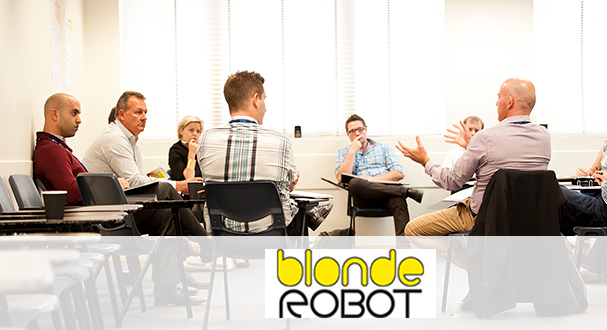
Explore our business growth programs
Using their own experiences and insights gained through starting, growing and exiting their own companies, our Growth Experts review your prep-work, teach, facilitate discussion, provide feedback, and help you develop your company’s growth plan.